Every now and then, a client enquiry comes through that reminds you how varied the journey of reclaimed materials can be. One such project involved supplying unused Australian hardwood railway sleepers to Great Mercury Island (Ahuahu) which is a privately owned island sanctuary off the eastern coast of the Coromandel Peninsula, in the Hauraki Gulf. The island is widely recognised for its ongoing conservation efforts, having undergone extensive pest eradication work and maintaining strict biosecurity measures to protect its native flora and fauna.
While the brief itself was relatively straightforward: replacing existing sleepers forming a driveway, it was the location and the process behind it that made it interesting.


A practical replacement for an existing structure
The project involved supplying approximately 300 unused Australian hardwood sleepers to replace older ones already forming a sleeper-laid driveway on the property. The sleepers were recessed into the ground to continue the existing driveway structure, maintaining the original design approach while upgrading ageing materials.
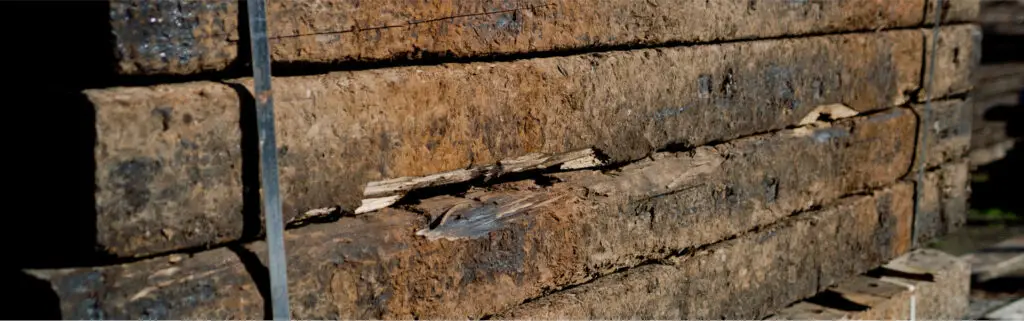
Australian hardwood railway sleepers are well suited to the Hauraki’s demanding coastal environment. Because these sleepers were unused, their surfaces were flat, free from exposed grains, splits, and ex-rail residues like grease and oil that come with decades of service. That made them equally comfortable underfoot for barefoot wanderers and practical for vehicle traffic.
Using reclaimed materials also meant the project could avoid newly milled timber or toxic treatments, while preserving the rustic visual finish that ties naturally into the island’s surroundings.
Working within a sensitive environment
Sanctuary Islands can be especially vulnerable to introduced pests, and biosecurity plays a central role in day-to-day operations on Great Mercury Island. Even small risks like seeds or insects travelling in unnoticed can have long-term impacts on isolated habitats, never mind larger pests like rodents that can inflict catastrophic damage.
This meant the logistics and organisation around the driveway refurbishment required additional planning and communication in advance of transport to allow for formal inspections prior to departure.
Coordination and inspection
Well before delivery, discussions took place with the island’s biosecurity ranger to ensure the sleepers were prepared in a way that allowed efficient inspection and minimised risks ahead of time. This involved the bundles being raised while in storage, sprayed for pests prior to loading on to the carrier and thinking through how the sleepers were arranged and presented for inspection before leaving the mainland.
Before loading for the sea leg of the journey, inspections were carried out with involvement from Auckland Council, with trained dog handlers assisting in the process. Detection dogs are commonly used in conservation and border environments for their ability to identify organic material or pests that might otherwise go unnoticed. Once cleared, the sleepers were transported by barge to the island for installation.
It was the level of communication and care from the initial enquiry through to inspection and delivery that ensured the right materials arrived safely, without compromising the island’s biosecurity.
Great Mercury Island (Ahuahu) continues to be recognised for its conservation work, and projects like this offer a small glimpse into what that protection looks like in practice. Sometimes it’s not the scale of a project that makes it memorable, but where it ends up.